
Closing the Bones
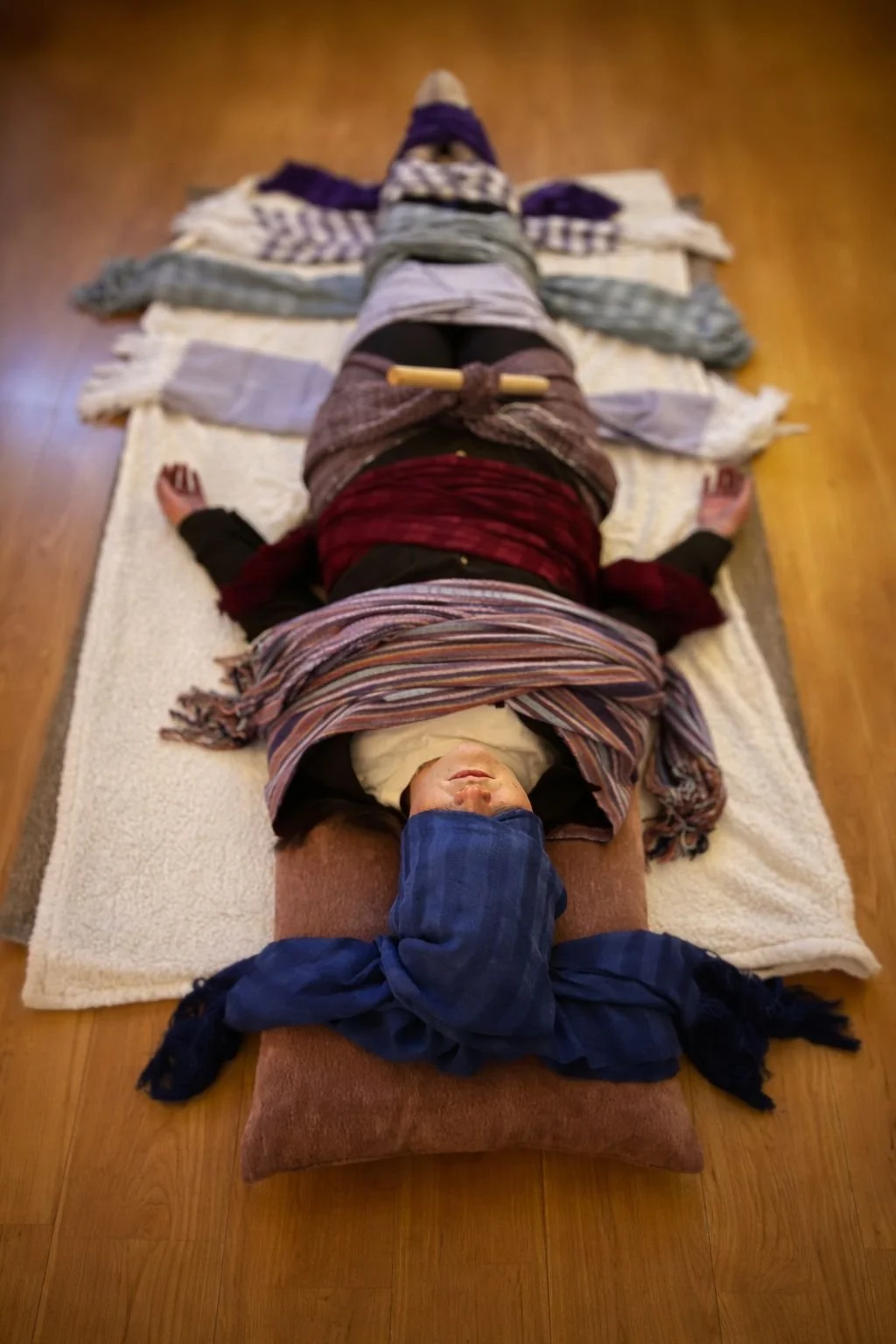
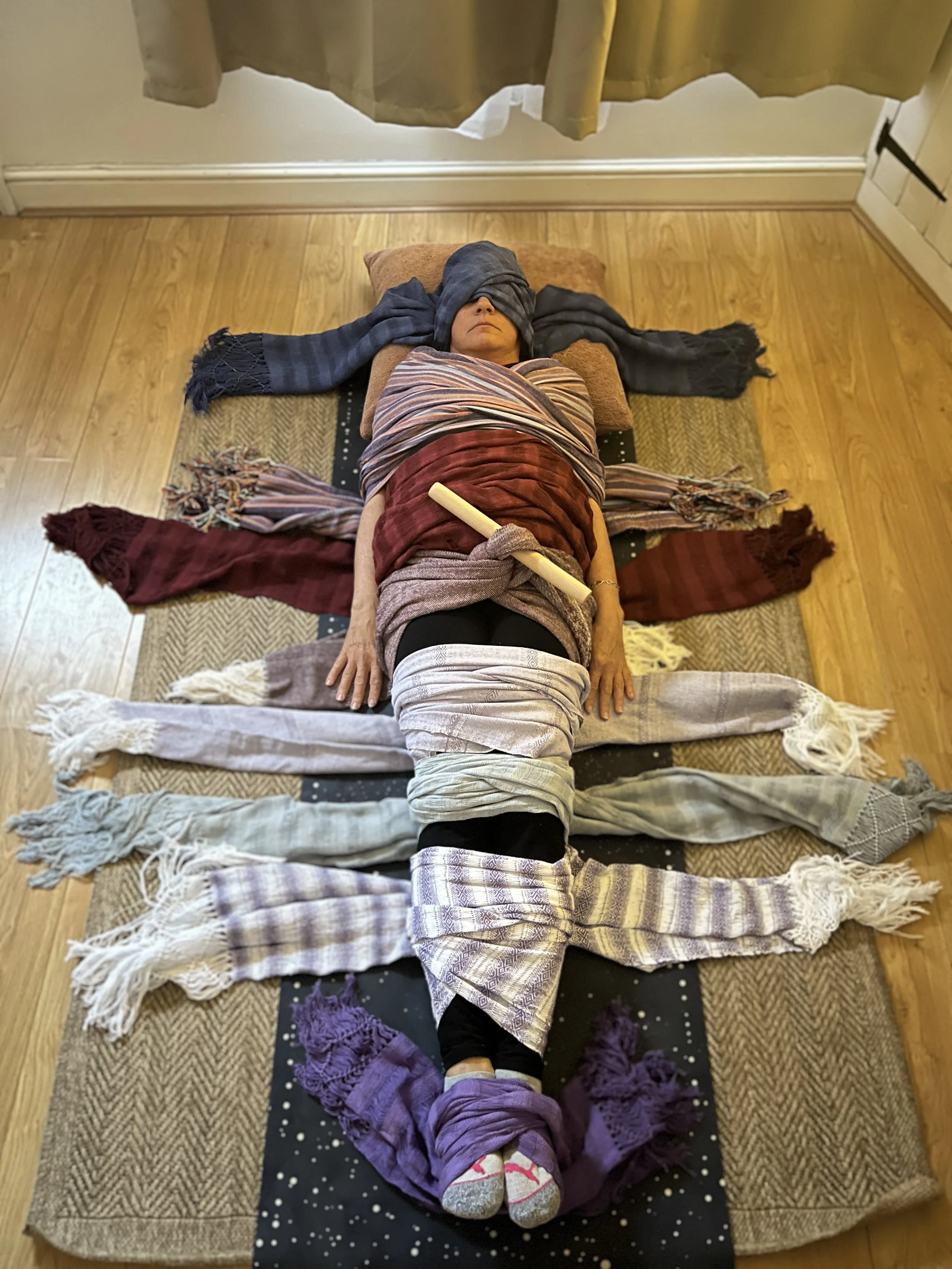
Closing the Bones is a deeply healing and nurturing ceremony that holds space to honour your body and mark transitions.
It is an ancient practice rooted in the maternal and community based healing traditions of Mexico and South America, where it is most widely known - though forms of closing, binding, and ceremonial holding exist across cultures worldwide. This work was passed from grandmother to daughter, midwife to community, carrying a lineage of physical, emotional, and spiritual support. It was never simply a treatment, but a rite of passage, a way of being witnessed as one chapter closes and another begins.
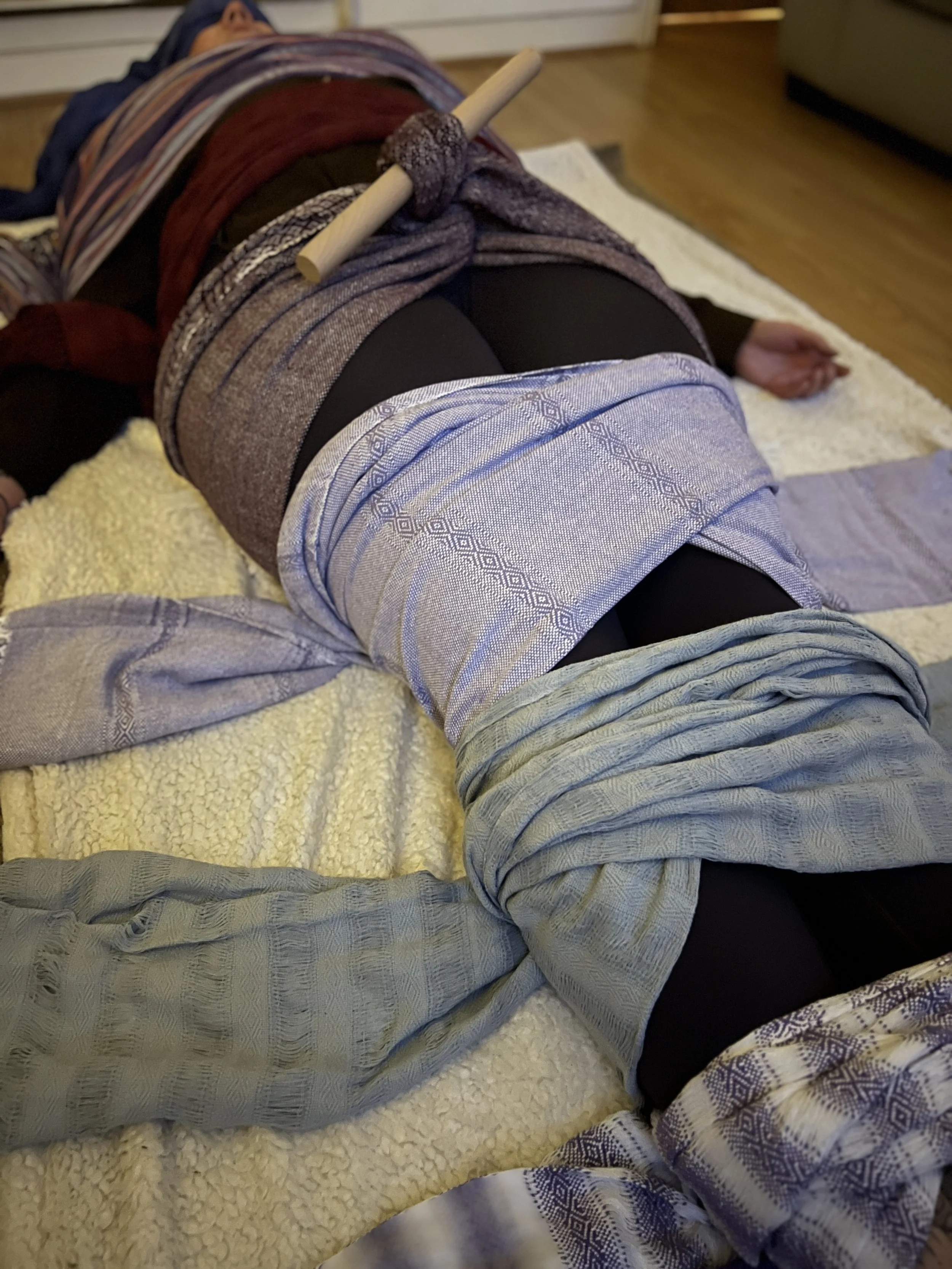
Traditionally offered during the first 40 days after birth, this practice includes gentle abdominal and hip work (and upper body if desired), followed by wrapping with a rebozo - a woven shawl from Mexico or Ecuador, regarded as sacred.
Evidence informed
In ‘Why Postnatal Recovery Matters’, Sophie Messager discusses the only scientific study on postpartum binding to date. In a study of 160 women (80 receiving wrapping, 80 controls):
64% reported improved pelvic and perineal pain
79 out of 80 said they would recommend the treatment
MRI scans showed decompression of the sacro-iliac joints, improved positioning of the bladder and uterus, reduction in lumbar lordosis, and better oxygenation.
-
I used to believe that a Closing the Bones ceremony was only meant for someone who had carried a pregnancy to full term. I didn’t realise how deeply it could support someone after loss. I truly wish I had met Tiarna sooner and been able to have a ceremony after my first miscarriage.
As someone who has experienced recurrent miscarriages, this ceremony helped me reconnect with my body in a way I didn’t know I needed. It allowed me to feel acknowledged in my grief, honoured in my experience, and gently brought back into myself. I now feel connected to my body again.
-
I’ve just recently had the most wonderful experience of a Rebozo massage & Closing the Bones Ceremony with the lovely Tiarna.
From start to finish I felt totally held in a safe space, free from judgement & allowed to be just authentically myself.
Tiarna has a really professional & calming manner that puts you at ease straight away so I was able to sink into the process deeper.
With the gentle rocking movements I could feel my nervous system instantly calm & it felt like a heavy weight being lifted just to give my body time to ‘just be’.. no forcing, no doing…just being.
I had the best nights sleep afterwards & still feel a deep sense of calm deep within that I can keep returning to.
-
During the postpartum period — even years or decades after birth
After miscarriage, stillbirth, abortion, or baby loss
Before or after hysterectomy, fertility challenges, or IVF
To honour milestones, rites of passage (menarche, marriage, menopause)
After loss or major life changes
For anxiety, shock, PTSD, overwhelm, or sensory overstimulation
For endometriosis, PCOS, painful periods, prolapse, or diastasis recti